Home / Industries / Logistics
Fewer forklift strikes and handling injuries
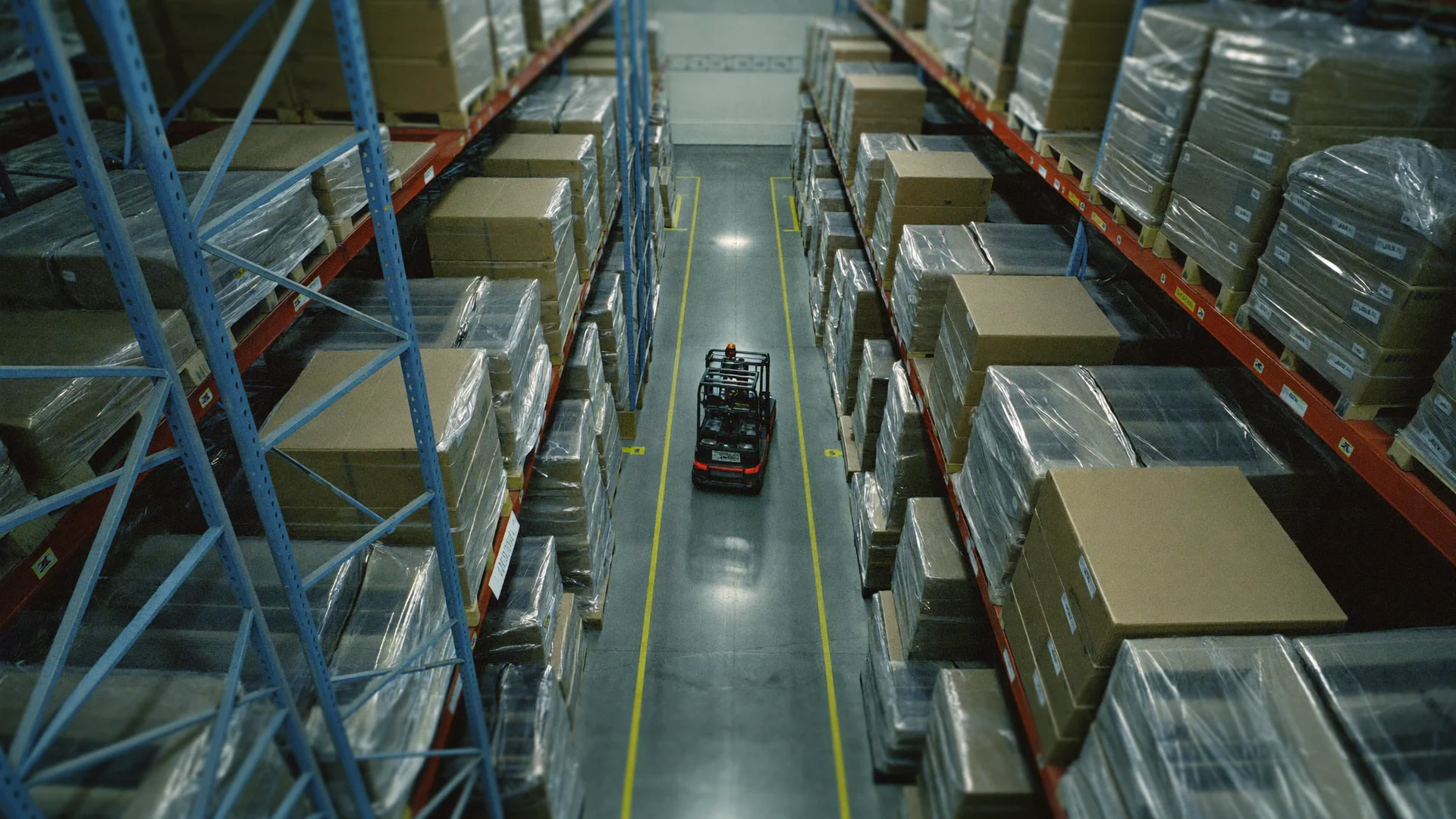
Warehouse incidents cluster where trucks, forklifts and people share a floor. Invigilo watches speed, separation and housekeeping on every dock and aisle already on camera, and each finding becomes a task for the shift supervisor.
Where warehouse injuries start
Throughput pressure makes every shortcut look reasonable. These risks show up on camera many times a shift in a busy facility.
- Forklift overspeedTrucks moving faster than the aisle allows.
- Pedestrian conflicts at docksPeople and forklifts crossing paths at doors and staging lanes.
- Reversing trucksPeople on foot behind a reversing truck or forklift.
- Conveyor proximityHands, clothing and people near or on moving conveyors.
- Racking and housekeepingOver-stacked loads and blocked aisles.
- Manual handlingLifting and reaching at the pick face that wear people down pick by pick.
Detections a warehouse deployment starts with
Speed and separation rules are set per aisle, dock and shift, with alerts in about a second.
Vehicles and people
- Forklift and pedestrian proximityA person on foot inside the working envelope of a moving truck, including behind a reversing one.
- Overspeed in the aisleVehicle speed per aisle and zone against your site's limit.
- Docks and staging lanesPeople in a loading lane while trucks and forklifts are moving.
Floor and handling
- Racking and stackingLoads stacked above the safe height and blocked aisles or egress routes.
- ConveyorsClimbing onto a conveyor, and proximity while it runs.
- ErgonomicsPoor lifting posture at the pick face, logged by station.
Measured at a global logistics operator
On its existing warehouse CCTV, watching poor ergonomics, speeding forklifts, climbing onto conveyors and proximity to moving machinery.
80%
Fewer incidents on the watched warehouse floor risks
Global logistics operator
30%
Faster response
Global logistics operator
The operator stays unnamed.
What happens after a hazard is found
The detections change by site. What happens after a detection stays the same.
Step 1
The alert reaches a person
WhatsApp, Teams or email and the dashboard, in about a second, with the frame and time.
Step 2
It becomes a task with an owner
Raised against its zone and routed to whoever is responsible for that area on that shift.
Step 3
Overdue cases escalate
An action left open past the window your HSE team sets moves up on its own.
Step 4
The fix is checked on the same camera
The feed that raised the finding verifies closure, and the pattern feeds the next briefing.
More on warehouse safety
Global logistics operator
80% fewer incidents on the watched warehouse floor risks, with 30% faster response.
Read moreForklift and warehouse safety
Speed, separation and reversing checks for forklifts and people on the same floor.
Read morePPE detection
High-visibility clothing and other PPE checked by zone, per shift, against your rules.
Read moreCommon questions
Does it work with the cameras we already have?
Yes. Standard RTSP or ONVIF cameras work as they are, along with PTZ, drone and body camera footage, so most sites need no new cameras. Send two hours of recorded footage and we return it annotated, so you see results on your own cameras first.
How long does deployment take?
First alerts arrive within 48 hours of connecting your cameras. Zones and thresholds are then tuned with your safety team on site, so alerts match how each area actually works.
Does it need a stable internet connection?
Video is processed on a server at the site or in the cloud, chosen site by site. With a site server, only events leave the site, and detection keeps running when the network link drops.
What happens after a detection?
The alert reaches WhatsApp, Microsoft Teams, Telegram, email or the dashboard in about a second, with the frame and a short clip. It becomes a task with an owner, escalates if left open, and closure is checked on the same camera.
Can it measure forklift speed from CCTV?
Yes. Speed is measured per aisle and zone against your site's limit, and the path between a truck and a pedestrian is tracked, so overspeed and close passes are flagged as they happen.
How accurate are the alerts?
95% recall and 80 to 90% accuracy, tuned per site and per risk type. Your team marks each finding, and inaccurate findings are fed back to retrain the models.
Talk to our team
Questions, pricing, a pilot, or a free footage review on your own cameras. Tell us what you need and we come back with next steps.