How To Use AI To Prevent Falls From Height In Construction?
AI video analytics on existing CCTV monitors high-risk fall zones continuously, triggers fast alerts, and proves prevention through a 30-day pilot.
Falls from height are still one of the main causes of serious injuries on construction sites. Most contractors already have work at height permits, toolbox talks and method statements. On paper, the system looks complete. On a live site, edges change, openings appear, and supervisors cannot be everywhere.
AI video analytics gives you another way to watch high-risk areas using the cameras you already have. The goal is simple. You want fewer people working near edges, openings and platforms without proper protection, and you want to spot problems early rather than after an incident.
This article looks at practical ways to prevent falls from height in construction using AI. It explains why falls still happen even when safety rules exist, how AI works with existing CCTV, how to run a focused 30-day pilot, how to turn alerts into real prevention, and what to prepare before you request an Invigilo SafeKey demo.
For a deeper refresher on basic work-at-height controls, you can pair this article with Invigilo’s dedicated work-at-height safety guide.
Why Do Falls From Height Still Happen When Safety Rules Are In Place?
Most people on-site know the rules. They have been told that they must use harnesses, stay behind guardrails and avoid makeshift platforms. Yet serious falls still occur.
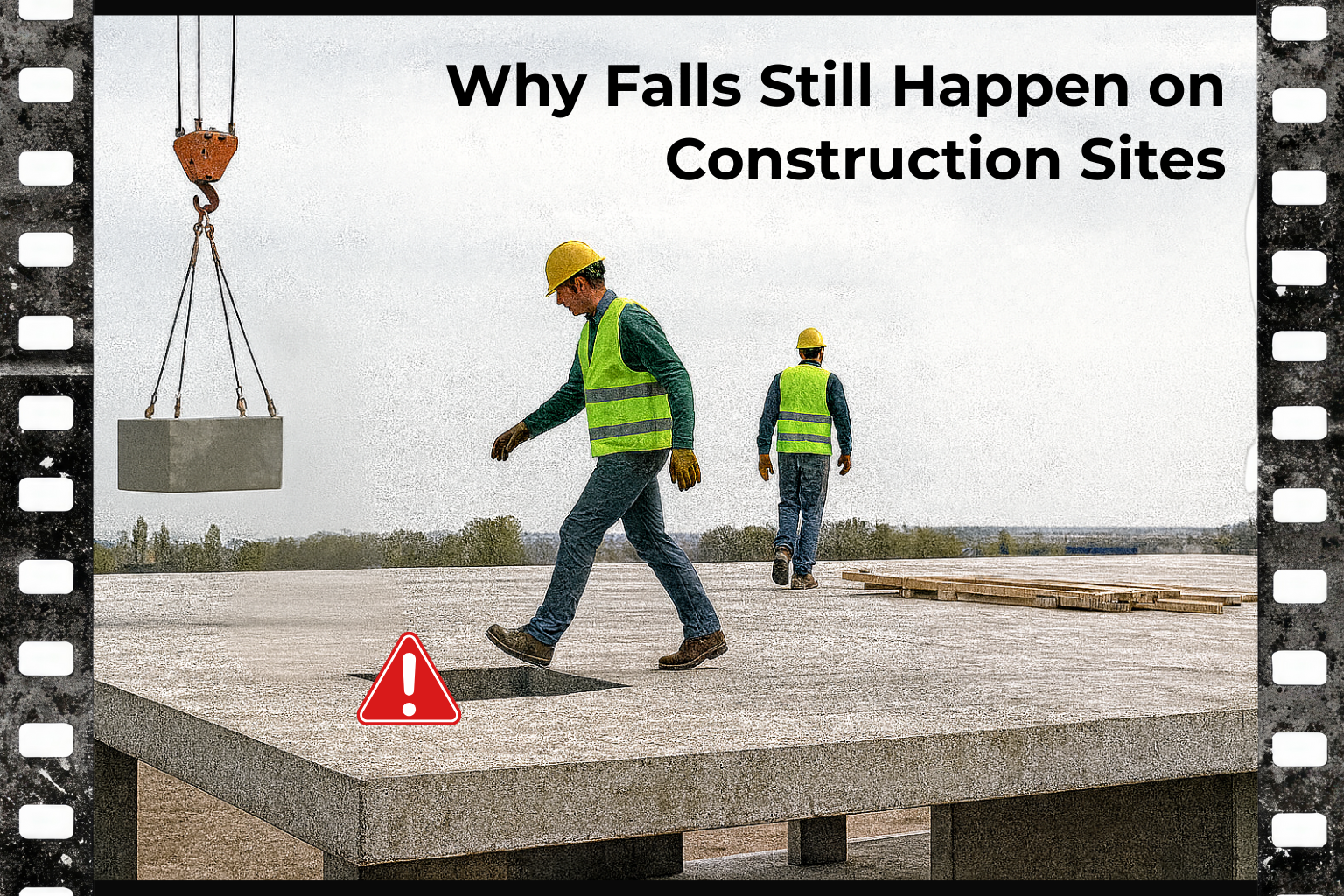
On a typical project, falls often start with small, familiar situations. A worker stands near a slab edge to guide a load and assumes it will take only a moment. Someone walks across a floor and does not notice a small opening that was left uncovered after rework. A crew works from a mobile platform and decides harness lanyards are not needed for a short job. Someone climbs on formwork or rebar because it feels quicker than using proper access.
These habits build up over time. People see them so often that they stop recognising them as unsafe. The risk grows until one step goes wrong.
Inspections and patrols are important, but they only show what is happening at the time of the visit. An area may pass inspection in the morning, then become unsafe in the afternoon when a railing is removed, a cover is lifted or a new crew starts work. Many risky acts last only a few seconds. They are easy to miss and rarely appear in reports.
AI does not replace permits, training or equipment. It helps you see what actually happens between inspections in the exact places where a fall would be most serious.
How Does AI Video Analytics Use The Cameras You Already Have?
AI video analytics uses computer vision models to analyse live or near-live camera feeds. It detects people and objects, then checks whether what it sees matches rules you define for fall risks.
Which Cameras Should You Use For AI Fall Prevention?
Most medium and large projects already have CCTV for security or monitoring. An AI safety platform like Invigilo SafeKey connects to these camera feeds over your existing network. You do not need to rebuild the entire system.
You select a small set of cameras that look at real fall hazards. Common examples are slab edges, roof perimeters, mezzanines, scaffolds, mobile elevated work platforms and large floor openings. The AI model focuses on these key views. This keeps the scope tight and makes it easier to tune the system.
What Can AI Detect Around Edges And Openings?
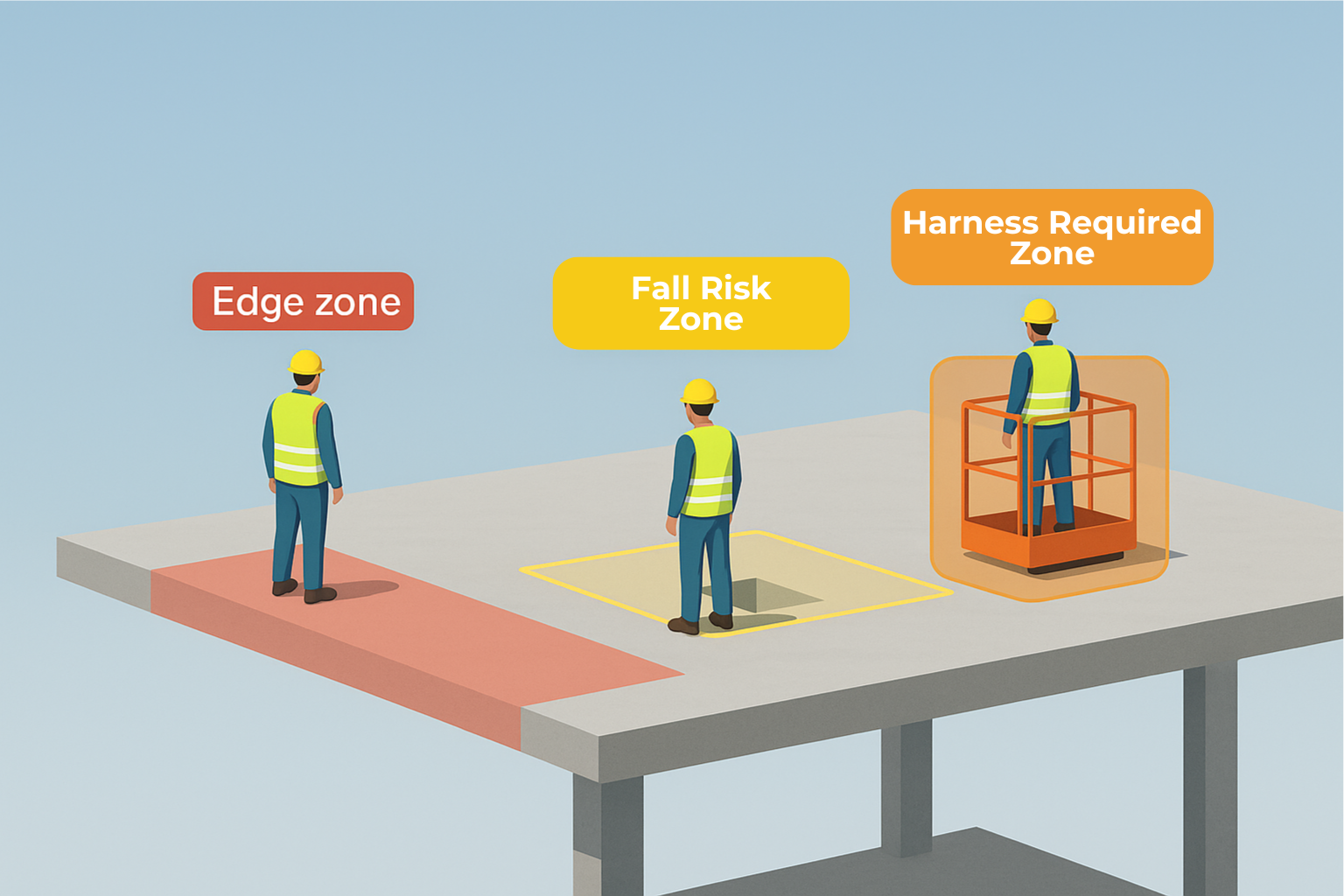
Once views are selected, you and your vendor mark zones and rules on each image. For falls from height, you might define:
- A band along a slab edge where no one should stand without guardrails
- A box around a floor opening that should always be covered or guarded
- An elevated area where no work should be taking place at all
The AI then looks for patterns such as:
- A person on the edge when barriers are missing or broken
- A person standing or walking near an uncovered opening
- A person in a platform or basket where a harness is required but not visible
- A person entering a marked no-go zone at height
When the system detects one of these patterns, it creates an event. Invigilo SafeKey can show the event in a dashboard and send alerts to supervisors on channels such as WhatsApp, Microsoft Teams or email, depending on how you configure it.
You define which areas and behaviours represent fall risks. The AI does the continuous watching and tells you when those patterns appear.
What Are The Strengths And Limitations Of Using AI To Prevent Falls From Height?
AI is very good at watching defined zones without getting tired, spotting people and obvious changes, and counting how often certain events happen in each area and time window. This is very hard to do by hand.
AI is less effective if views are blocked, the lighting is poor, or the angle does not show key details. It may not judge every harness attachment correctly, especially from a distance or through clutter. It also cannot replace required scaffold and equipment inspections.
If you treat AI as a way to close visibility gaps between inspections, rather than as a replacement for supervisors, you will get better results and more realistic expectations.
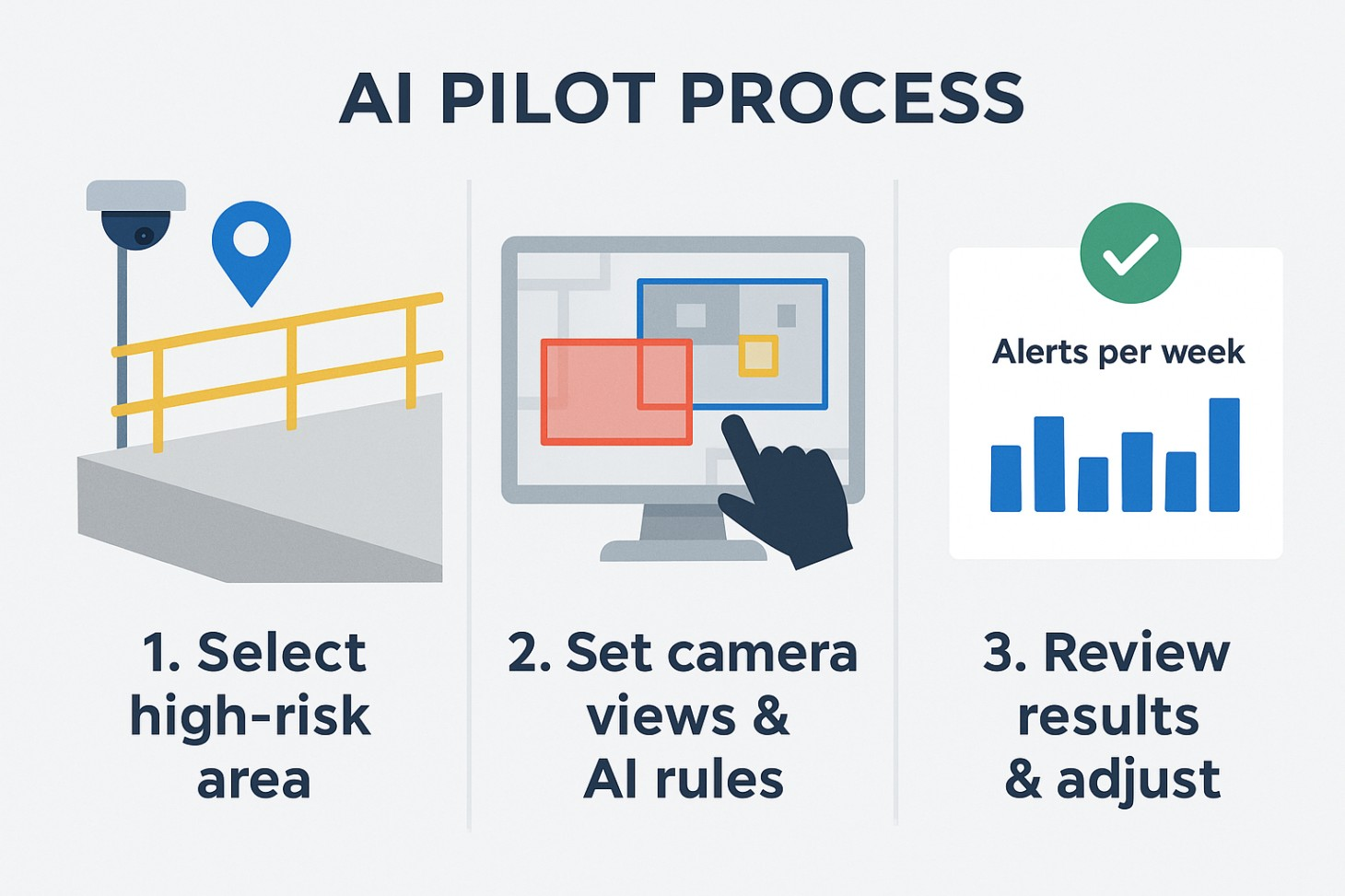
A 30-Day AI Pilot Framework To Prevent Falls From Height
Step 1: Select One High-Risk Area For Your AI Pilot
Start with a single area where a fall would be serious and where work at height is frequent. For example:
- A tower block with many open edges
- A mezzanine used for services installation
- A busy scaffold run
- A roof with regular access
The ideal pilot zone has a real fall risk, active work for at least a month, and at least one camera with a clear view of both workers and the edge or opening. You are not trying to transform the whole site at once. You are testing AI in one meaningful area.
When you test ways to prevent falls from height in construction using AI, starting with a single, well-chosen zone keeps the pilot simple and easier to evaluate.
Step 2: Check Camera Views And Set Simple AI Rules
Review the chosen camera views with your safety and site teams. Ask three questions. Can you clearly see people near the edge or opening? Can you see whether barriers or covers are in place? Is the view stable and free from constant blockage or glare?
If not, you may need to adjust the angle or height of the camera, or add a basic extra camera. Small changes often make a big difference.
Then work with the vendor to draw virtual zones and define a small set of rules, such as:
- Alert when a person appears in the edge band, and no barrier is recognised
- Alert when a person appears in the opening box, and the cover is missing
- Alert when a person appears in a platform zone where a harness is required but not visible
Simple rules are easier to explain to supervisors and easier to refine during the pilot.
If you want help shaping those first zones and rules, you can reach out to Invigilo and book an Invigilo SafeKey demo using your own camera views so you can see how the AI would behave before you commit to a full pilot.
Step 3: Decide How You Will Measure Pilot Results
Before the pilot starts, agree on how you will judge its value. Useful metrics include:
- Number of fall risk alerts per week in the pilot area
- Typical time from alert to supervisor action
- Change in repeat alerts from the same spot
- Change in reported near misses related to falls in that zone
Plan a short weekly review during the pilot. Look at a sample of alerts, check false positives, note improvements and agree on small adjustments. This regular review keeps the pilot on track and shows whether AI is helping you catch and reduce fall risks.
A practical next step is to ask the Invigilo team to turn this into a one-page pilot brief for one of your current projects. That makes it easier for a project director or HSE lead to understand and approve.
How Do You Turn AI Alerts Into Real Fall Prevention?
An AI system can highlight risky situations, but only people can fix them. The way you respond to alerts matters.
Create a simple response playbook so everyone knows what to do. For example, the duty supervisor reviews each fall risk alert clip as soon as possible. If the risk is still present, the supervisor contacts the foreman, asks them to stop work briefly, restore protection or move workers to a safe position, and records what action was taken. Repeated serious cases can be logged as formal unsafe conditions.
This does not need a long manual. It just needs clarity on who watches alerts, who responds in the field and when the safety team becomes involved. When these roles are clear, AI feels like part of normal site operations rather than an extra system no one owns.
Use weekly trends, not just single events. Look at which edges, openings, or platforms generate many alerts, which shifts or trades are involved, and which types of work link to missing protection. Use these insights to adjust work sequences, redesign temporary railings or update method statements so people do not need to stand so close to edges.
You can also use anonymised AI clips in toolbox talks and safety briefings. Real examples from your own site are often more convincing than stock photos or generic posters.
How Do You Keep AI Fall Monitoring Fair And Trusted?
Any camera-based system needs careful handling of privacy and trust. If people feel watched but not respected, they will resist the system.
Keep your AI scope tight. Focus on a small number of clearly defined high-risk zones rather than every camera on site. Work with your vendor in the early weeks to reduce false positives so that most alerts relate to real hazards, such as missing guardrails or open covers, not harmless activity.
Be clear about who can see AI data and why. Decide which roles can access live views, alerts and stored clips, and set sensible retention periods for safety footage. Put in writing that the purpose of AI video analytics is to prevent falls from height in specific zones and to improve controls, not to score individual performance.
Explain the system to workers in simple language. Make it clear that cameras are already present and that AI helps the safety team use them better. Emphasise that the goal is to reduce serious falls, not to punish every minor mistake. Involve supervisors and worker representatives in reviewing early alerts so they can see how the system is being used in practice.
If you want deeper detail on privacy and deployment issues, you can refer to Invigilo’s dedicated blog on implementing video analytics at scale, and use this article as your practical guide for fall prevention.
What Is The Best Next Step If You Want To Try AI For Fall Prevention?
Falls from height remain one of the most serious risks on construction projects. Rules, training and inspections already exist. The gap is the continuous visibility of what happens between those inspections and how often protections are removed or ignored.
AI video analytics offers a practical way to close part of that gap. By using cameras that are already installed, you can monitor critical edges, openings and elevated platforms more closely, act faster when unsafe situations arise and learn where your work at height system needs to improve.
You do not need to commit to a full rollout across every project. One focused 30-day pilot on a meaningful high-risk area is enough to see whether AI fall prevention works on your site and whether your teams can work with it.
If you want to move from theory to practice, the next step is straightforward. Reach out to Invigilo and request an Invigilo SafeKey demo that is tailored to falls from height on your own project. Share a few camera views and your main concerns, and let the team show you how AI sees your risk zones. That first look at your own site through an AI lens often turns an idea into a concrete plan to keep people safer at height.
Related posts
Underground Changes Every Safety Rule You Know
Singapore's Cross Island Line runs 70m below ground. Underground construction inverts work at height, plant proximity and lone worker risk. Here is how.
Why Australian Industrial Sites Stopped Buying CCTV AI
Australian HSE leaders aren't buying video analytics anymore. They're buying safety intelligence. Here's what the shift means for WHS in 2026.

What to Demand from AI Video Analytics on an Oil and Gas Site in Saudi Arabia
AI safety platforms built for general workplaces are being sold into Saudi oil and gas operations. Here are the 8 questions that reveal the difference.