Best Way To Track Safety Lapses Across Multiple Oil And Gas Sites: A Practical 2025 Guide
Get a comparable view of safety lapses across rigs, terminals, and plants, using AI on existing CCTV to flag red-zone and PPE risks in real time.
If you are responsible for HSSE across several rigs, terminals and plants, you already know the question that matters. What is the best way to track safety lapses across multiple oil and gas sites in a way that is continuous, comparable and credible to regulators and the board?
The practical answer is simple to state, even if it takes work to execute. You need three things working together:
1. A shared definition of what a safety lapse is across all sites
2. An AI layer on your existing CCTV to detect unsafe acts in real time
3. Your existing EHS system is the system of record for investigations and actions
In this guide, we focus on that combination and how our AI video analytics platform, Invigilo SafeKey, fits into it using only capabilities we can verify on our own site.
Why Do Oil And Gas Operators Need A Better Way To Track Safety Lapses Across Multiple Sites?
The stakes are not abstract. Recent International Labour Organisation estimates put global work-related deaths at around 2.9 million a year, with hundreds of millions of non-fatal injuries. The oil and gas sector sits in the high-risk part of that picture.. Boards and regulators are moving from “show me your incident rate” to “show me how you are catching unsafe acts and near misses across the whole portfolio”.
Most operators already have:
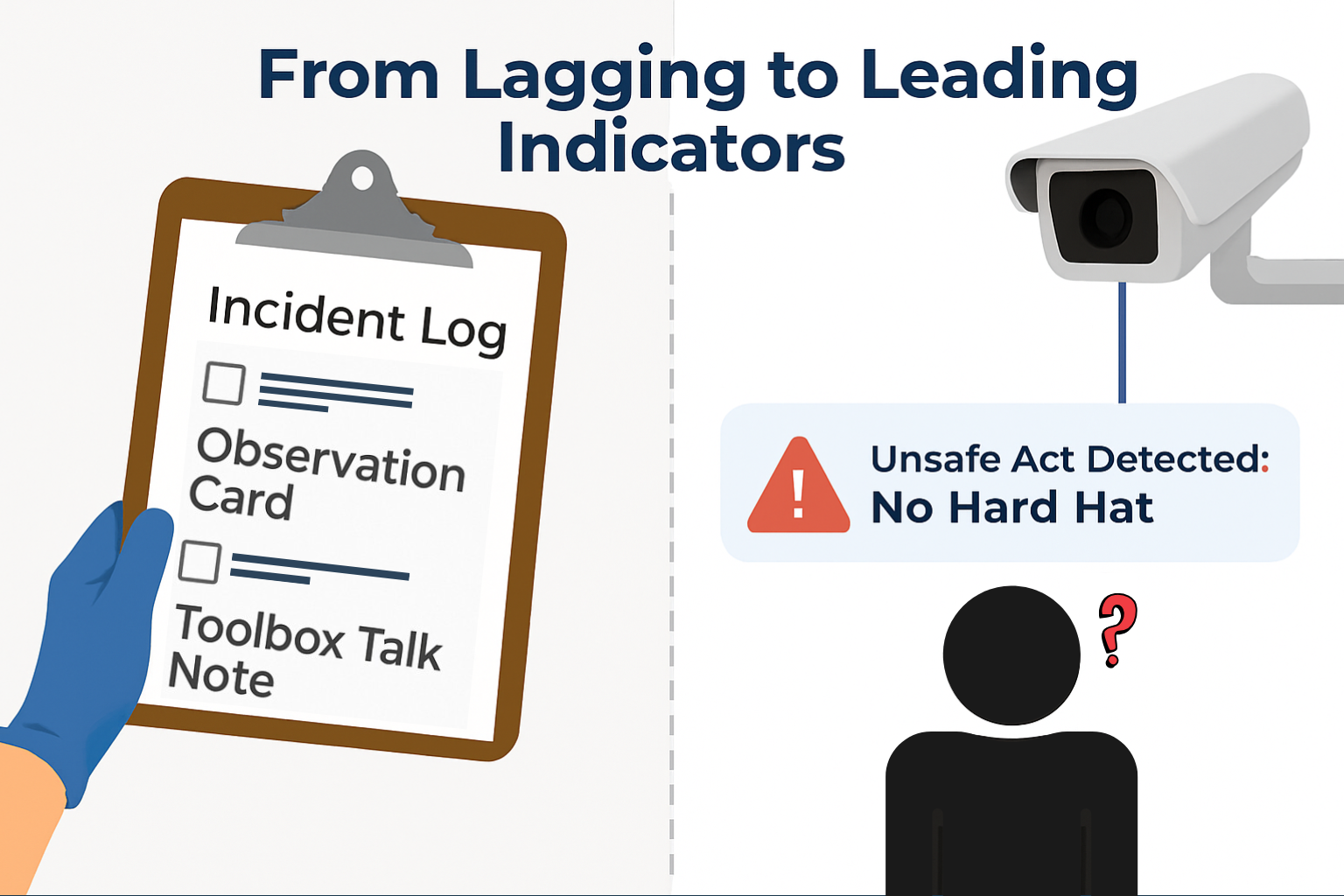
- Site-level incident logs and investigations
- Observation cards and toolbox talk notes
- Monthly or quarterly roll-ups into group dashboards
These are essential, but they are mostly lagging indicators. OSHA’s guidance on leading indicators is clear. Lagging indicators reflect events that have already happened, such as injury rates. Leading indicators tell you whether your safety activities are working before an incident occurs.
At the same time, almost every rig and plant already has extensive CCTV coverage. Without AI, those cameras only come into play after an event. With AI video analytics, the same cameras can detect unsafe acts continuously and feed standardised events into a multi-site view, without asking supervisors to sit in front of screens.
What Exactly Counts As A Safety Lapse Across Rigs, Terminals And Plants?
Before you look at technology, you need to agree on what you are tracking.
For multi-site oil and gas operations, a practical definition of “safety lapse” usually covers three layers:
- Unsafe acts and conditions such as missing PPE, people under suspended loads, workers entering red zones, missing barricades or working at height without proper harness use
- Near misses where an unsafe act could have led to harm or a process safety event, but did not
- Recordable incidents that meet internal or regulatory thresholds for injury, process safety or environmental impact.
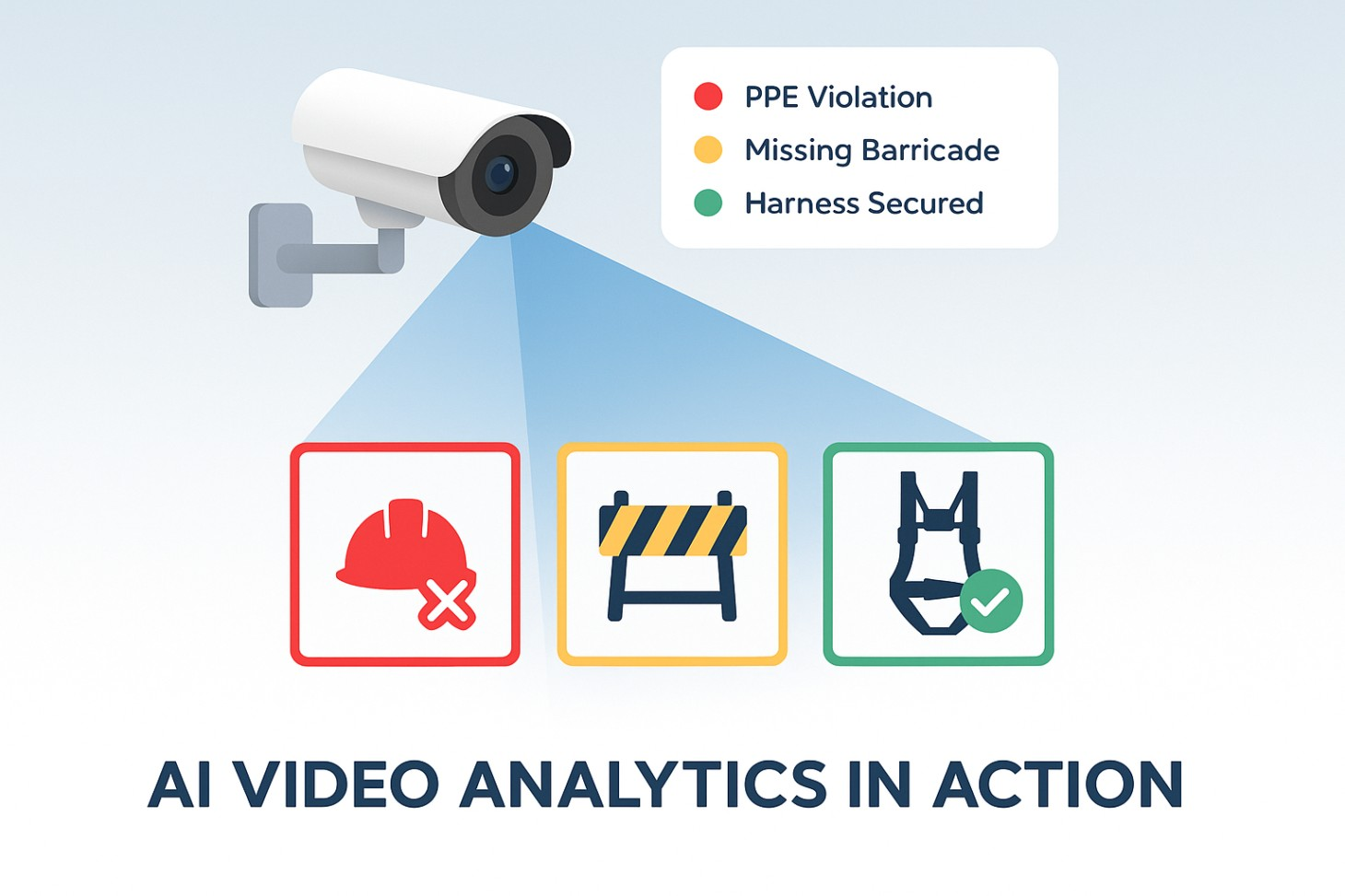
On our product page, we show that Invigilo SafeKey already detects many of these unsafe acts through AI video analytics. Confirmed detections include PPE non-compliance, proximity to energised machinery, line of fire under suspended loads, missing barricades, intrusion into configurable red zones, and work at heights where harness attachment is monitored.
On our oil and gas industry page, we explain how the platform integrates with existing CCTV, tracks unsafe behaviours, crowding and proximity to hazardous machinery, detects early signs of risk and near miss trends, and generates audit-ready reports, heatmaps and safety scores.
When you align your internal lapse taxonomy with these categories, you create a simple rule. Whether an unsafe act is spotted by a supervisor or detected by AI, it lands in the same family of events and can be compared across sites.
If you want a deeper look at how this plays out on a single asset, our article “AI System for Monitoring Safety on Oil Rig Platforms” walks through how an AI safety system monitors rigs with 24/7 detection, alerts and insights. That piece can be your reference when you explain this approach internally.
Why Are Traditional Methods Not Enough On Their Own At Multi-Site Scale?
Digital EHS platforms and incident systems are valuable. They structure investigations, corrective actions and compliance evidence. They become limiting when you expect them to be your only way to track safety lapses across many sites.
There are three common gaps:
First, coverage. These systems rely on people noticing and reporting unsafe acts. In high-tempo operations, many low-level lapses never make it into the system, which means your data is skewed towards serious events.
Second, continuity. Inspections, audits and patrols happen in rounds. Between rounds, behaviour can drift. On a busy rig or terminal, repeated red zone intrusions or unprotected work at height can occur long before the next formal check.
Third, comparability. Free text descriptions and locally defined categories are difficult to roll up. Even small differences in how sites classify and rate events make it hard to build portfolio-level indicators that leadership can trust.
None of this is a reason to abandon EHS systems. It is a reason to feed them with better, more timely data and to standardise categories.
How Does AI On Existing CCTV Become The Best Way To Track Safety Lapses Across Multiple Sites?
AI video analytics gives you a continuous, structured view of unsafe acts without changing how crews work.
The Invigilo SafeKey platform connects to your existing CCTV or compatible cameras. You do not need a wholesale camera replacement. Once connected, computer vision models analyse live video to detect defined unsafe acts in real time.
From our public product pages, Invigilo SafeKey can today:
- Detect PPE non-compliance in real time, with configurations for different environments
- Identify dangerous proximity to energised machinery
- Detect people under suspended loads in the line of fire
- Flag missing barricades around fall hazards or drop zones
- Monitor intrusion into user-defined red zones
- Detect work at heights without proper harness use or secure attachment
Events are logged in a central dashboard with time, camera, zone and classification, and you can download heatmaps, analytics and compliance trends across sites. Invigilo SafeKey also supports real-time notifications through WhatsApp, Microsoft Teams and SMS and can trigger sound and visual alerts on site, which makes it easier for supervisors to intervene immediately.
Across industries, our solutions are deployed at more than 100 sites, covering over 2 million square metres and detecting over 50,000 safety lapses, with detection of over 50 safety risks and more than 85 per cent verified detection accuracy. That experience gives you a realistic baseline for performance when you scale across rigs and terminals.
If you want to see how this applies beyond oil and gas before you commit, our guide “How to Track Safety Violations on Construction Sites with Video Analytics” explains the same pattern in construction and can help you brief internal stakeholders.
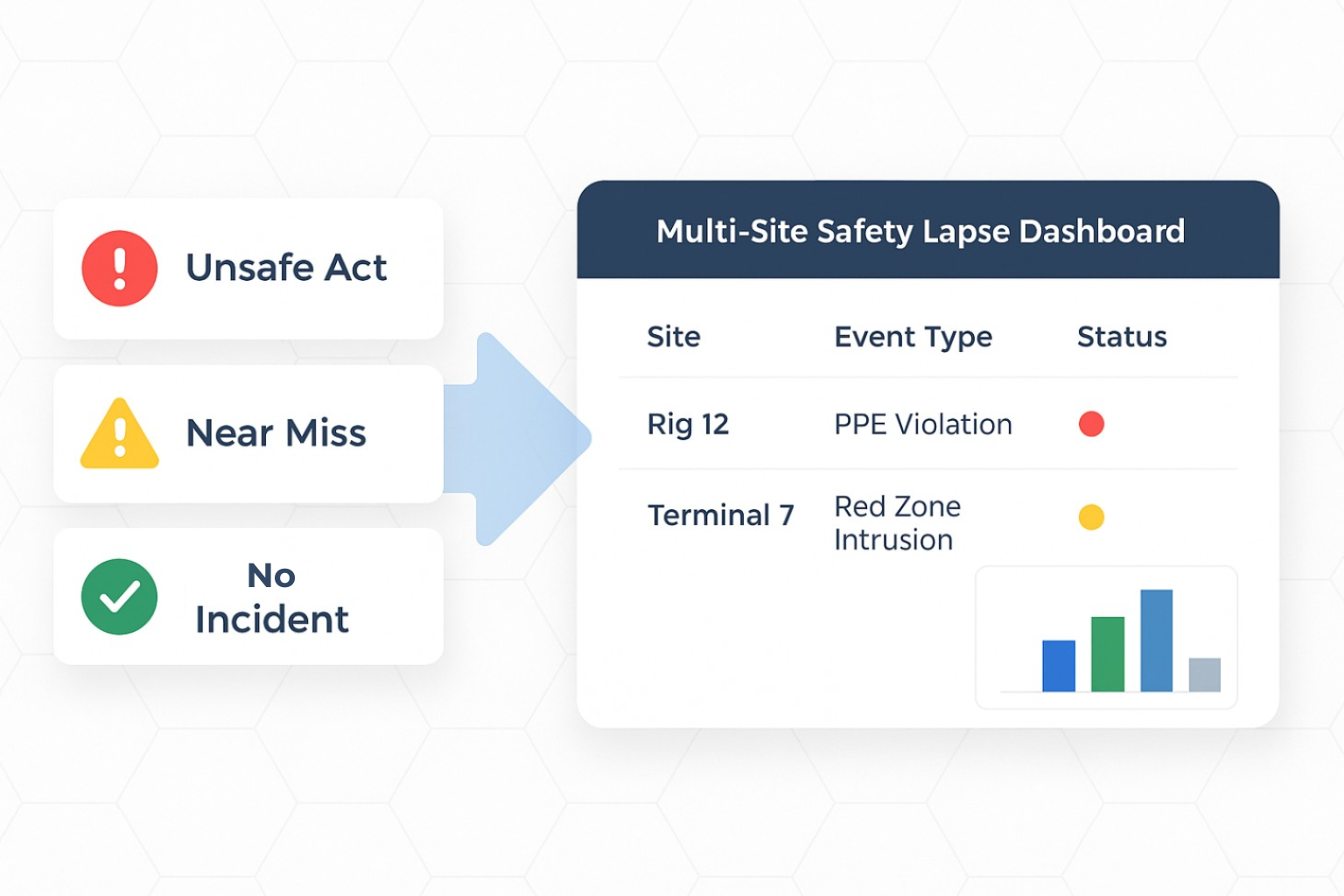
How Should You Combine AI Events And EHS Data Into One Multi-Site View?
The best way to track safety lapses across multiple oil and gas sites is to let each system do what it does best and connect them through a simple model.
At the front, Invigilo SafeKey detects unsafe acts and logs them with consistent categories. That gives you a stream of leading indicators across all connected sites.
Your EHS platform remains the system of record for investigations and corrective actions. You define thresholds that decide when an AI event becomes an EHS case. A single PPE miss may remain in the AI dashboard. Repeated line of fire breaches at one crane pad may trigger a formal near-miss entry and corrective actions.
On top of both, you build a portfolio dashboard using a minimal set of common fields: site, zone, task, contractor or team, event type and source. That lets you build leading indicators such as PPE non-compliance per 1,000 exposure hours, red zone intrusions per crane hour or work at height harness violations per shift, alongside traditional lagging indicators like Total Recordable Incident Rate.
OSHA’s leading indicator guidance encourages exactly this pattern. Leading indicators are proactive, preventive measures such as near-miss reports or unsafe act detections. Lagging indicators are outcomes such as injuries. A good programme uses leading indicators to drive change and lagging indicators to measure effectiveness. An AI-enabled multi-site view gives you both in one place.
If you would like help sketching this architecture for your own estate, our team can walk through real examples of SafeKey sitting alongside existing EHS tools and what those dashboards look like in practice.
What Simple 90-Day Plan Can You Use To Prove This Works?
You do not need to transform every asset at once. A focused 90-day pilot can give you clear evidence to take to leadership.
Step 1: Choose scope and targets
Pick two or three representative sites, for example, one offshore platform and one terminal. Choose two or three behaviours to focus on, such as red zone intrusions, line of fire on crane operations, and work at height harness use.
Step 2: Connect cameras and configure detections
Work with our team to connect existing CCTV and map zones. In Invigilo SafeKey, you enable relevant use cases, set severities and assign alert recipients. The aim is to start seeing real detections within days, not months.
Step 3: Tune and embed the response
Over the first weeks, refine zones and rules to reduce noise. At the same time, agree simple responses for each category. For example, a red zone intrusion triggers a radio call and coaching, while repeated events drive a review of layout or procedures.
Step 4: Compare before and after
After 60 to 90 days, use SafeKey’s heatmaps and compliance trends to compare lapse patterns before and after the pilot period. That gives you a concrete story about what changed and where you still have work to do.
If you would like support designing this pilot, we can adapt our internal playbooks to your asset mix and risk profile and help you prepare a concise proposal for your HSSE and finance stakeholders.
What Should You Ask Vendors Who Claim They Can Track Safety Lapses Across Multiple Sites?
To keep vendor discussions grounded in your reality, focus on questions that relate directly to the multi-site outcome you want. For example:
- Which unsafe acts and conditions can your system detect today in oil and gas environments, and how do those map to our priority risks such as PPE, line of fire, barricades, work at height and restricted zones?
- How do you integrate with existing CCTV in harsh outdoor and process conditions, rather than only with proprietary cameras?
- How are alerts delivered to supervisors and control rooms? Can you support site alarms and channels such as WhatsApp, Teams and SMS?
- What validated detection performance do you have for core use cases, and how do we monitor accuracy over time?
- What do your dashboards look like for multi-site views, and how can we export events for audits and regulators?
When you speak with us about Invigilo SafeKey, these are the areas we can help you with. We are comfortable grounding answers in live examples from more than 100 monitored sites and the 50,000 plus safety lapses already detected by our platform.
If you are preparing an internal brief or RFP, it can help to link colleagues to our oil and gas solutions page and our oil rig safety article, so they can see how AI video analytics behaves in conditions similar to theirs.
Conclusion: What Is The Best Way To Track Safety Lapses Across Multiple Oil And Gas Sites?
The best way to track safety lapses across multiple oil and gas sites is not to add more forms or more standalone dashboards. It is to put a clear safety lapse model in place, add an AI layer on your existing CCTV to detect unsafe acts in real time, and connect that stream of events to your EHS system and portfolio dashboards.
With Invigilo SafeKey, you can connect to your current cameras, detect over 50 safety risks in real time, receive alerts through channels supervisors already use and review heatmaps, analytics and compliance trends across your sites, including rigs and oil and gas facilities. You keep your existing processes and people, but you give them a continuous, comparable view of safety lapses that is difficult to achieve by manual means.
If you are ready to move beyond delayed reports and isolated incident logs, schedule a 30-minute SafeKey demo call with our team. In that session, we will map your current camera network and risk profile, show live examples of multi-site safety lapse tracking on SafeKey, and outline a focused 90-day pilot across two to three priority sites. You walk away with a concrete, decision-ready multi-site safety visibility plan that your HSSE, operations and finance leaders can review and approve.
Related posts
Underground Changes Every Safety Rule You Know
Singapore's Cross Island Line runs 70m below ground. Underground construction inverts work at height, plant proximity and lone worker risk. Here is how.

Why Australian Industrial Sites Stopped Buying CCTV AI
Australian HSE leaders aren't buying video analytics anymore. They're buying safety intelligence. Here's what the shift means for WHS in 2026.

What to Demand from AI Video Analytics on an Oil and Gas Site in Saudi Arabia
AI safety platforms built for general workplaces are being sold into Saudi oil and gas operations. Here are the 8 questions that reveal the difference.