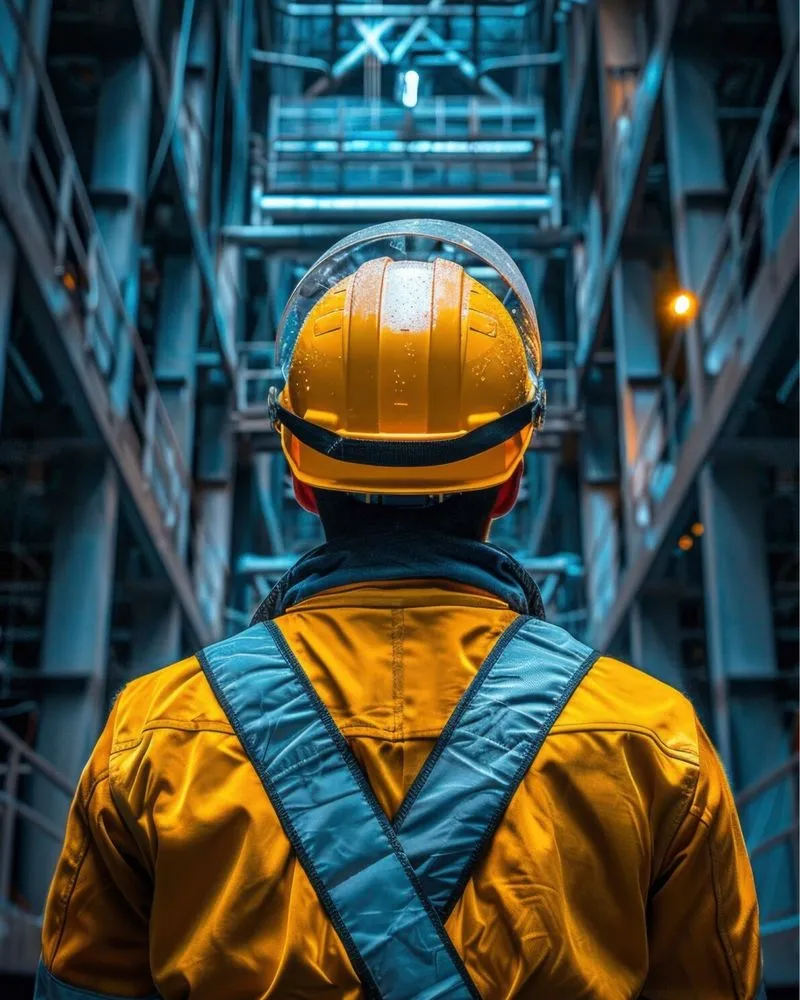
What to Demand from AI Video Analytics on an Oil and Gas Site in Saudi Arabia
AI safety platforms built for general workplaces are being sold into Saudi oil and gas operations. Here are the 8 questions that reveal the difference.

Oil and gas sites are not generic industrial workplaces. The hazard profile is different, the regulatory stakes are higher, and the cost of a monitoring failure is measured differently than in a warehouse or a manufacturing plant.
AI safety platforms built for general workplace monitoring are being sold into oil and gas operations across Saudi Arabia. Some perform. Many do not. The difference is not usually apparent in a vendor demo.
These are the eight questions that reveal the difference before you sign anything.
1. Does the Platform Detect Hazards Specific to Oil and Gas- Not Just Generic PPE?
The wrong question most HSE buyers ask: "Can your system detect PPE violations?"
Every platform detects hard hat and vest compliance. That is table stakes. On an oil and gas site, the hazards that produce fatalities are different: line-of-fire positioning during crane and lifting operations, simultaneous operations (SIMOPS) proximity violations, confined space entry without permit, hot work within exclusion zones, and personnel in the drop zone beneath elevated work.
The right question: "Show me your detection performance for hot work proximity violations, SIMOPS conflicts, and confined space entry monitoring- not in a controlled demo environment, but from active oil and gas deployments."
A platform that cannot demonstrate these capabilities in oil and gas conditions is a general workplace safety tool. It is not an oil and gas safety tool.
2. Can It Operate in Real Conditions on Saudi Oil and Gas Sites?
Vendor demos happen under optimal conditions. Saudi oil and gas sites in summer do not.
Outdoor refineries operate at 45°C and above. Dust events reduce camera visibility across large areas of a facility. Night shifts mean significant portions of a 24-hour operation happen in low light. Offshore platforms deal with sea spray, humidity, and limited sightlines. Onshore processing facilities have constant equipment movement and personnel overlap across multiple contractor teams.
The right question: "What is your detection accuracy for PPE violations and zone breaches in outdoor environments above 40°C, in low-light conditions, and in dusty environments? Provide data from actual oil and gas deployments, not test environments."
Any vendor who cannot provide condition-specific accuracy data from real O&G sites is presenting theoretical performance.
3. Does the Platform Process Data at the Edge- or Does Footage Leave Your Site?
Cloud-based video analysis requires footage to be transmitted off-site for processing. On an oil and gas site, this creates two problems.
First, latency. A hot work violation detected after a 30–60 second transmission and processing delay is not real-time monitoring. For line-of-fire and confined space hazards, the response window is measured in seconds.
Second, data security. Operational footage from oil and gas facilities contains sensitive process data, facility layouts, and contractor activity. Saudi Arabia's Personal Data Protection Law (PDPL) and the data governance requirements in Aramco contractor HSE agreements both impose obligations on how this data is handled and where it is stored.
The right question: "Where is video processed? Where is it stored, how long is it retained, and what happens to it when the contract ends? Does any footage leave this site?"
Edge-based processing means detection happens on-site, within seconds, with no footage transmitted externally. This is the architecture that satisfies both the latency requirement and PDPL obligations.
4. Can It Support Aramco HSE Scorecard Reporting Specifically?
For Aramco contractors, HSE performance is not just an internal metric. It is a commercial variable. Scorecard performance directly affects contract renewals, new award eligibility, and contractor classification.
The key scorecard metrics are TRIR (Total Recordable Incident Rate), near-miss reporting frequency, safety observation completion rates, and corrective action closure time.
Most AI safety platforms produce alert logs. Alert logs are not the same as HSE scorecard documentation. The gap between raw platform data and Aramco-formatted submission reports is significant, and most platforms leave it entirely to the client to bridge.
The right question: "Can your platform generate reports formatted for Aramco HSE scorecard submissions? Show me an example output. How much manual work does my HSE team still need to do to translate platform data into scorecard-ready documentation?"
The answer will quickly reveal whether the vendor has actually deployed on Aramco contractor sites or just claims they can.
5. What Is the False Positive Rate in Oil and Gas Environments Specifically?
False positive rates that are acceptable in a retail warehouse are not acceptable on an oil and gas site.
In a warehouse, 50 false alerts per day means supervisors start ignoring notifications. On a refinery, 50 false alerts per day means safety officers are chasing non-events during shifts when real hazards may be developing unmonitored in adjacent zones.
The right question: "What is your documented false positive rate for confined space, hot work, and line-of-fire detections specifically, not overall system averages, on active oil and gas sites?"
A vendor unable to provide detection-category-specific false positive data from oil and gas deployments is giving you averages that include low-stakes detections alongside high-stakes ones. The averages are not useful for assessing performance where it matters.
6. Can It Handle Multi-Site and Multi-Contractor Monitoring from a Single Interface?
Aramco contractors typically operate across multiple sites simultaneously. EPC firms managing large projects have workforce from dozens of subcontractors operating in parallel, each with different PPE standards, zone access rules, and permit requirements.
A platform that monitors one site well but requires separate logins, configurations, and reporting processes for each additional site creates administrative overhead that erodes the safety benefit.
The right question: "How does your platform handle monitoring across five concurrent sites with different contractor configurations? Can I generate consolidated HSE reports across all sites in a single output? Show me what that dashboard looks like."
7. What Does Deployment Actually Look Like on a Live Production Facility?
"We can deploy in days" is a claim every vendor makes. The reality on an operational oil and gas site is different: camera compatibility checks, network configuration for edge processing, hazard model tuning for site-specific conditions, and supervisor training all take time.
On a live production facility, deployment cannot disrupt operations. The vendor's process needs to be assessed against this constraint, not against their standard timeline for a greenfield construction site.
The right question: "Walk me through your deployment process on an operational refinery or processing facility. What downtime does camera configuration require? How is model tuning handled for our specific hazard profile? What does the first 90 days look like?"
8. Who Else Have You Deployed for in Oil and Gas in Saudi Arabia?
Client references in oil and gas in Saudi Arabia are not the same as client references in general industrial. A platform that performs well in commercial construction does not automatically perform in an oil refinery.
The right question is not whether they have Saudi clients. The right question is whether they have oil and gas clients in Saudi Arabia with verifiable outcomes.
Ask for: client name or confirmed industry and geography, deployment scale in sites and cameras, TRIR improvement data, and a contact reference willing to speak.
The Standard Has Been Set in Saudi Arabia
Invigilo has been deployed across oil and gas, construction, and industrial sites in Saudi Arabia, including a validated AI safety command centre deployment within the Saudi Aramco contractor ecosystem. The platform processes video at the edge, generates Aramco-compatible HSE documentation, and has been validated under real Saudi oil and gas site conditions.
If you are evaluating AI safety platforms for oil and gas operations in the Kingdom, we are prepared to answer every question in this list - with evidence from active deployments.
Frequently Asked Questions
What is AI safety monitoring for oil and gas?
AI safety monitoring for oil and gas uses computer vision to analyse live CCTV footage and detect hazards specific to oil and gas environments, including hot work proximity violations, confined space entry, line-of-fire risks, and PPE non-compliance, sending real-time alerts to HSE supervisors.
Does AI safety monitoring work with Aramco HSE scorecard requirements?
Yes, when the platform is configured for Aramco contractor requirements. This includes TRIR-aligned incident logging, near-miss documentation, and reporting outputs compatible with Aramco HSE scorecard submission formats.
Does AI safety monitoring require new cameras on an oil and gas site?
No. Platforms like Invigilo run on existing IP camera infrastructure already installed on site. Edge-based processing means no new network infrastructure or cloud connectivity is required.
What hazards can AI safety monitoring detect on an oil and gas site?
PPE non-compliance, hot work exclusion zone violations, confined space entry, line-of-fire risks during lifting operations, SIMOPS proximity alerts, restricted area intrusions, and lone worker detection in isolated plant areas.
Is AI safety monitoring compliant with Saudi Arabia's PDPL?
Edge-based platforms that process and store footage on-site satisfy the PDPL's data localisation requirements. Confirm that no video or personal data is transmitted to external servers under the vendor's standard contract.
Related pages
Related posts
Underground Changes Every Safety Rule You Know
Singapore's Cross Island Line runs 70m below ground. Underground construction inverts work at height, plant proximity and lone worker risk. Here is how.

Why Australian Industrial Sites Stopped Buying CCTV AI
Australian HSE leaders aren't buying video analytics anymore. They're buying safety intelligence. Here's what the shift means for WHS in 2026.
Construction Safety AI for Saudi Arabia
Construction safety AI helps Saudi HSE teams detect PPE violations, missing barricades, restricted zone entry and work-at-height risks in real time.